What to See in Mahón: A Guide to Menorca's Capital | Hostal Jume
May 7, 2026
Discover the most iconic sights in Menorca’s capital
Mahón (Maó), the capital of Menorca, stands out for one of the largest natural harbours in the world, a British-influenced old town and its own cuisine: Mahón-Menorca cheese, Xoriguer gin and mayonnaise. It's a city for wandering slowly, finding viewpoints over the harbour and enjoying its markets. This guide covers what to see and do in Mahón.
Mahón at a glance
- The harbour: a waterfront stroll, terraces and the Xoriguer gin distillery.
- Old town: Plaça de la Constitució, the church of Santa Maria and the British-era "boinders".
- Markets: Mercat des Peix and Mercat del Claustre.
- Illa del Rei: the Hauser & Wirth art centre on an islet in the harbour.
- Food and drink: Mahón-Menorca cheese, Xoriguer gin and pomada, and mayonnaise.
Why is Mahón's harbour famous?
Mahón's harbour is one of the largest natural harbours in the world and the city's main attraction. It reaches almost five kilometres inland and has been coveted throughout history by Phoenicians, Romans, British and French; in fact, the city's name comes from the Carthaginian Mago, who used it as a naval base. Today you can take one of the boat tours that leave from the quay, eat by the water on its terraces, or visit the historic Xoriguer gin distillery, where the local gin has been made since the 18th century and you can try the famous pomada (gin with lemonade). At sunset, the reflections on the water make it one of Menorca's most photogenic spots.
What to see in Mahón's old town
The old town preserves a strong 18th-century British heritage, from the time when Mahón was the island's capital. Its most distinctive feature are the boinders, glazed bay windows that jut out from the façades and whose name comes from the English bow window. Don't miss:
- Plaça de la Constitució, with the town hall and its clock brought from London in the days of Governor Kane.
- The church of Santa Maria, home to a monumental early-19th-century organ with more than 3,000 pipes; morning concerts run from May to October.
- Plaça de la Conquesta, presided over by the statue of King Alfonso III, who brought the island into the Crown of Aragon in 1287.
- The Teatre Principal, opened in 1829 and considered the oldest opera house in Spain.
- The Pont de Sant Roc, the only surviving gate of the old medieval wall.
Along the way you'll find discreet viewpoints, such as the one at Plaça de la Miranda, with views over the harbour from above.
What to eat in Mahón: markets and food
Food is one of the great reasons to visit Mahón, and its markets are the best starting point. The Mercat des Peix (fish market), dating from the 1920s, keeps its original granite counters and today combines fresh fish stalls with a lively scene of tapas, vermouth and wine. Right next door, the Mercat del Claustre occupies a former Carmelite convent turned into stalls, bars and small restaurants. Local specialities include DOP Mahón-Menorca cheese, Xoriguer gin and pomada and, according to tradition, mayonnaise (salsa mahonesa), said to take its name from the city. For dessert, try island pastries such as ensaïmadas, pastissets or carquinyols.
How to visit Illa del Rei and the harbour fortresses
Illa del Rei is an islet in the middle of the harbour that was home to an 18th-century naval hospital and now houses the Hauser & Wirth art centre, with eight exhibition galleries, an outdoor sculpture trail and gardens designed by landscape designer Piet Oudolf. A shuttle ferry leaves from Moll de Llevant, in the port of Mahón, and gets you there in about fifteen minutes. At the harbour mouth stands the imposing La Mola fortress, a 19th-century military stronghold with spectacular sea views.
When to visit Mahón
Mahón is pleasant all year round, but spring and autumn bring mild temperatures, lower prices and plenty of calm. If you travel in early September, don't miss the Festes de Gràcia, the city's big festival, with its horses and the spectacular jaleo. And since Menorca is one of the first places in Spain to see the sunrise, getting up early to watch the sun rise over the harbour is well worth it. Just minutes away you'll also find Es Castell and its Cales Fonts harbour, or Es Grau beach.
Where to stay in Mahón
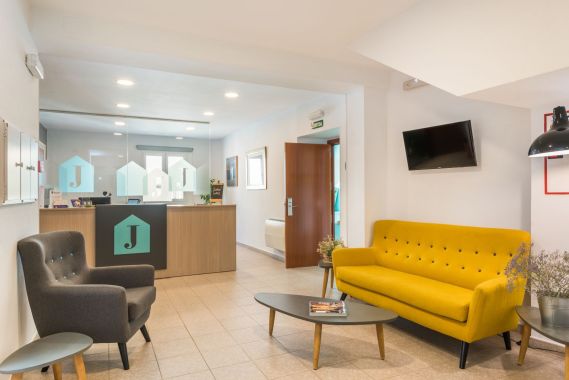
Staying in the centre of Mahón is the best way to experience the city: everything is a short walk away and you're well connected to the rest of the island. At JUME URBAN ROOMS we offer comfortable, welcoming accommodation right in the heart of Maó, the ideal base from which to discover its harbour, its streets and its cuisine. Book your stay and come and discover the capital of Menorca.
Frequently asked questions about Mahón
What are the must-sees in Mahón?
The natural harbour, Plaça de la Constitució with the church of Santa Maria and its monumental organ, the Mercat des Peix and Mercat del Claustre, and Illa del Rei with the Hauser & Wirth art centre.
How do you get to Illa del Rei?
By a shuttle ferry that leaves from Moll de Llevant, in the port of Mahón, taking about fifteen minutes.
What local food and drink can you try in Mahón?
DOP Mahón-Menorca cheese, Xoriguer gin and pomada (gin with lemonade), and local pastries. According to tradition, mayonnaise also originated here.
When is the best time to visit Mahón?
Spring and autumn offer good weather, fewer crowds and lower prices. The Festes de Gràcia, the city's big festival, take place in early September.
Is it called Maó or Mahón?
Maó is the official Catalan name and Mahón is the Spanish form. Both refer to the same city, the capital of Menorca.
Where should you stay in Mahón?
In the city centre, so everything is a short walk away. JUME URBAN ROOMS offers accommodation right in the heart of Maó.